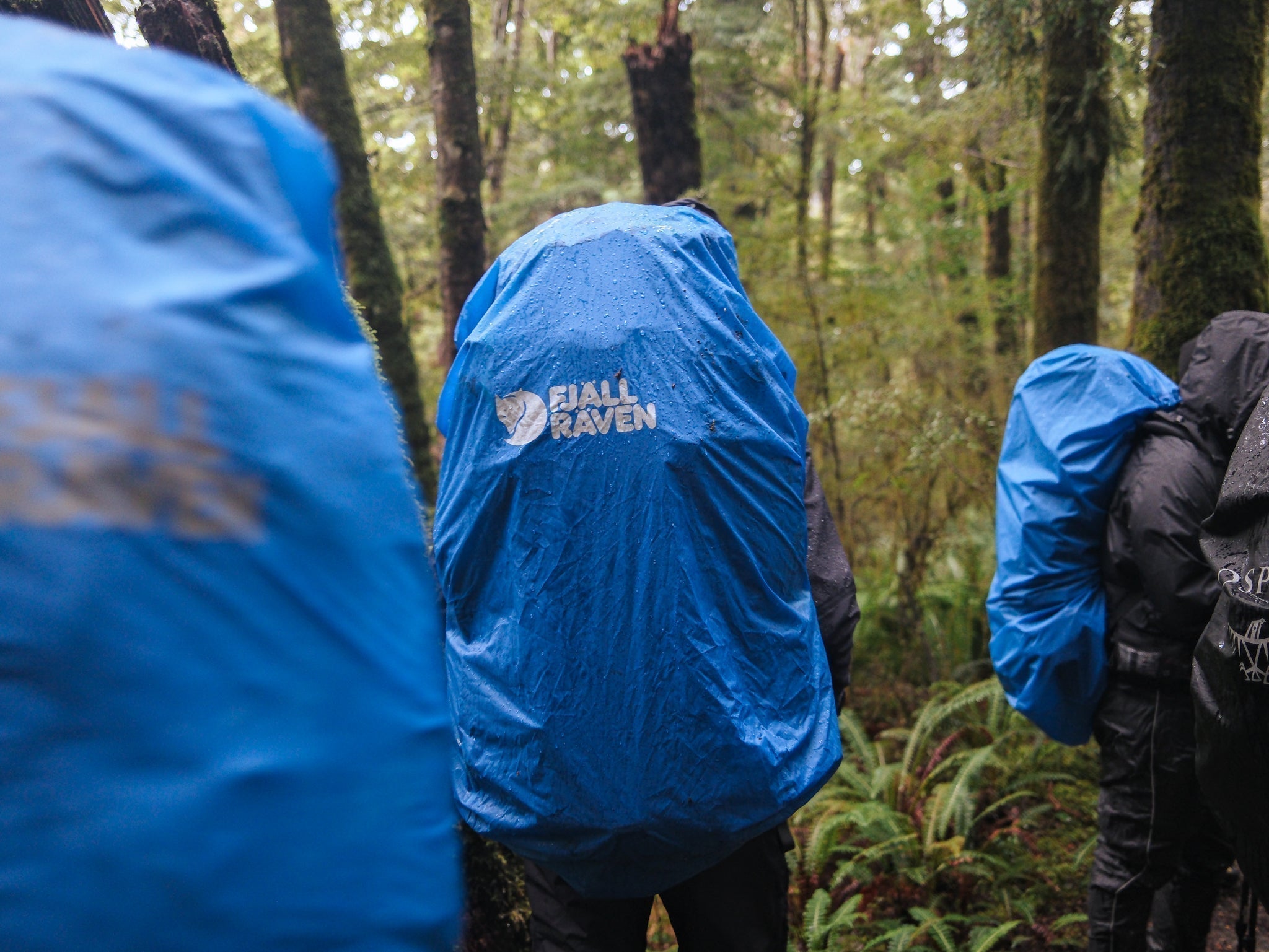
The morning of the Kepler Hike, I woke up feeling smugly confident. Backpack packed. Waterproofs prepped. Legs… somewhat ready after a winter of pretending that TC laps counted as cardio training. I’d watched enough “What I Pack for Multi-Day Hikes” TikToks to convince myself I was essentially a seasoned thru-hiker.
It took approximately one hour on the track for those affirmations to crumble like a soggy muesli bar.
So consider this blog a combination of:
- What to pack
- What not to pack
- And how my first multi-day hike taught me everything the hard, wet way (featuring trial and error and gear jealousy).
The Kepler Track: a quick rundown
For those not in the know, the Kepler Track is one of New Zealand’s legendary Great Walks, a network of premier, multi-day trails created by DOC to showcase the best of Aotearoa’s backcountry. Think swing bridges, alpine ridgelines, ancient beech forests, glacier-carved valleys, and huts that make you question whether you should just move in.
The Kepler is a 60km loop starting and ending in Te Anau, climbing up above the bushline to Luxmore Hut and along the exposed alpine tops before looping around Lake Te Anau toward Motorau Hut. It’s dramatic, beautiful, and in Fiordland, which means one very important thing:
It rains. A lot.
We’d dreamed of hiking it in shorts and T-shirts, smugly applying sunscreen and living our best outdoorsy lives.
Reality?
A very wet, very windy, very humbling three days.

Our “modified” route
Kate (fellow Racers Edge Gear Guide) and I were lucky enough to be chosen for the Fjällräven Kepler Hike, and the plan was the classic three-day loop.
In reality, we went off piste with logistics and heeded the weather warning (as you always should). Rather than the usual loop, we hiked up to Luxmore, where we spent one night before heading back down and around to Motorau hut. Once at Motorau we spent two nights before tackling the hike back to Te Anau. Extreme flooding and stormy conditions meant we ducked out of the forest at Rainbow Ridge for safety and hiked the final leg on the bike path and road until once again, our route was fully blocked by flooding and we had to hitch a ride back to town for the last few kilometres.
Upon returning to the land of signal and 5G, we were greeted with a power outage and news of what the weather had done to the rest of the country whilst we'd been battling it out in the bush, so with 73kms under our belt we didn't feel shy about taking that short ride back to civilisation.
Go figure.


![]() Packing lessons: the wet edition
Packing lessons: the wet edition
Right. Let’s talk gear.
⭐ MVP #1: Pack liners & Dry bags
Fjällräven gave me a pack liner, which in hindsight was subtle foreshadowing that the next few days would be spectacularly damp. I also packed my own dry bags that helped keep PJs, cameras and other essentials, extra dry and safe. Everything inside my pack stayed dry, which is more than I can say for myself.
⭐ MVP #2: Waterproof trousers + merino
I will never again slander waterproof pants.
They were the buffer between me and becoming a walking puddle.
Merino? Absolute hero.
Fast drying, warm even when wet, and didn’t make me smell like a swamp creature.
❌ The villain: my waterproof jacket
Lightweight? Yes. Breathable? Yes. Able to handle the entire contents of Lake Te Anau being dumped from the sky? Absolutely not.
I won't name names but I got very cold, very wet, and very jealous of Kate, who had packed a proper waterproof. Watching her shrug off the rain like some dry mountain goat hurt my soul.
⭐ Kate’s stand-out: Salomon Quest 4 boots
Four days of rain, mud, snow, puddles deep enough to drown a trekking pole…
Her feet? Bone dry. Mine? We’re not talking about it.
❌ What I missed: Camera wet weather proofing
This one's for my fellow photographers.
One of my main jobs on the hike was to capture our adventures, which sounded very wholesome and achievable when packing my 65L Osprey Ariel at home. I even dedicated a whole section of my bag to camera gear.
However, the majority of the hike was simply too wet to shoot. At one point, I trudged past Fjällräven’s photographer and caught sight of the absolute masterpiece of engineering he’d created: a camera wrapped in what can only be described as a glorified plastic bag fortress. I stared at it longingly and instantly regretted not bringing my own custom wet bag… or, honestly, just a decent supermarket bag.
The hero of the trip? My GoPro. That little tank powered through the storm, letting me capture content without risking turning my proper camera into an expensive sponge.
Lesson learned: when hiking in Fiordland, waterproof your gear like you’re preparing it for a deep-sea expedition.
⭐ MVP #3 - My Camelbak 2L Water Reservoir
Maybe I’m late to the party on this one, but honestly? My 2L Camelbak Water Bladder and a stash of electrolytes were potentially my favourite bit of kit I took. Hands-free hydration? Sign me up every single time.
There is nothing more demoralising than stopping mid-downpour, peeling off your bag only to fish out a bottle of water that you now have to re-pack with freezing fingers.
Add in some electrolytes and suddenly I wasn’t just surviving the hike, I was thriving. Thanks to Pure for the liquid motivation.
Plus, when everything you own is wet, muddy, or mysteriously damp for reasons you don’t want to investigate, having easy access to clean water feels like luxury.
So, lesson learned:
Water bladder + electrolytes = elite hiking combo.

Firm faves;
These items deserve an applause:

Some honourable mentions:
- Microfibre towel – BEST THING I PACKED
- Head torch – essential for late hut bathroom missions and packing in the dark. Extra points for it has a red or green light mode to keep from waking others up in the hut.
- Sleeping bag liner – cosy and added extra warmth
- Lightweight cookers (MSR + Jetboil) – warm food = happiness
- Leki Cressida Walking poles - Great for balance when navigating mud and easier on the knees for the relentless downhill. Kate was a pole hater but post-hike now has a little more love for those glorified sticks.
- In-ear headphones; Great to block out the snoring in the hut. Extra points for packing a merino hoody, balaclava and sleep mask for an extra cosy sleep.

Hut regrets
There is nothing worse than being wet and cold…except walking into the hut and developing hut PJ envy.
Everyone else looked snug in fleeces and comfy hut hoodies while we sat there wishing we'd bought that cosy layer currently sitting on the backseats of my truck.
Things we should have packed:
- Cosy hut fleece or hoody
- Hut shoes (Kate mourned this one deeply) such as TNF ThermoBall Traction Mules
- Actual snacks – cheese, crackers, miso soup, tea/coffee, sweet treats
- Kindle and card games (rainy hut day entertainment is no joke)
Things I did remember:
- Merino PJ’s & comfy pants
- Hut slippers (I will be clinging to that minor win forever.)

Final thoughts
Despite the weather chaos, the detour, the dampness, and the National Weather Emergency, I’d do it again. It was pure and utter type 2 fun, and now I'm back at my warm desk reminiscing it, it was great fun.
The Kepler is stunning, challenging, and full of character, just like Fiordland itself.
Next time I’ll pack:
- A high rated waterproof
- Hut fleece
- Snacks worthy of a celebration
- A Kindle
- And possibly a sense of self-preservation
Until then, learn from my mistakes, pack well, and may your waterproofs be stronger than mine.
Happy hiking. 🥾🌧️⛰️

Written by Elle – Gear Guide, wet human, humbled hiker