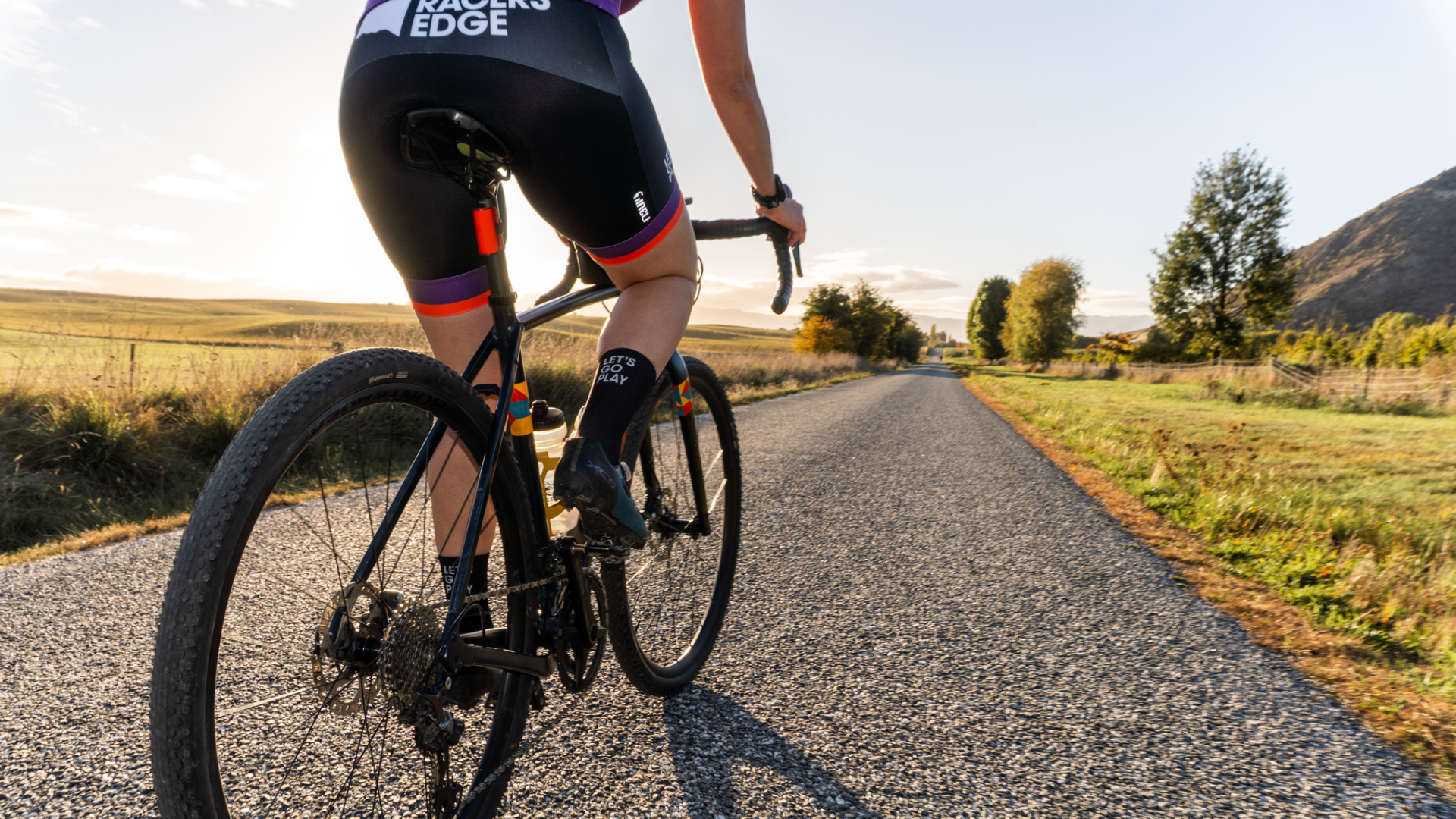
Written by Racers Edge ambassador Tim Brazier.
As a Racers Edge ambassador and endurance coach based here in Wānaka, I spend a lot of time helping athletes understand not just how to train, but why they're training a certain way. Winter is one of the most powerful windows in the year to shift physiology in your favour, if you approach it deliberately.
Most riders come out of summer feeling pretty fit. You've been riding consistently, you've done some harder efforts, you've probably climbed a lot.
But then winter rolls around… and things plateau. You're riding but not really improving. Or you're not sure what to work on. That's completely normal.

Why Progress Slows Down
Through summer, most riding naturally sits in a similar space: steady endurance, moderate-hard efforts, long climbs at a consistent pace. That's great for building fitness. But over time, your body adapts to that type of work, and progress slows.
Think of it like this: you've built a strong engine… but now it needs a bigger ceiling.
The Simple Idea: Raise Your "Ceiling"
Instead of just riding steady, winter is a great time to include some short, harder efforts. These don't need to be complicated. They just need to feel hard, be short, and be repeatable.
This helps your body handle higher effort, which makes everything else feel easier later.
One simple session to try: find a short climb (30–45 seconds), then:
- Ride hard for 20–40 seconds
- Use a slightly heavier gear
- Stay controlled (not sprinting wildly)
- Roll back down and fully recover (a good few minutes)
Repeat 6–8 times. That's it. Sticky Forest can be a great wee venue for this!
These short efforts improve strength and power on the bike, confidence on the climbs, and your ability to handle harder efforts — raising your overall potential so that when summer comes, you can grow the engine to a higher level.

Don't Forget Your Easy Riding
At the same time, keep up your easier riding. The gravel trails around Wānaka and Hawea along the rivers are perfect on a nice winter's day. A good easy ride should feel like:
- Breathing controlled and relaxed
- You can talk comfortably
- You're not pushing the pace
These rides build your base and help you recover. We're talking Zone 1 (Z1) or Zone 2 (Z2) where great aerobic stimulus happens. If you're new to zones, here's a simple way to think about them:
| Zone | Feel |
|---|---|
| Z1 – Easy | Very relaxed, recovery pace |
| Z2 – Steady | Comfortable, all-day effort |
| Z3 – Moderate | Working, but sustainable |
| Z4 – Hard | Strong effort, harder to talk |
| Z5 – Very Hard | Short, intense efforts |
Your short hill repeats sit up in Z5. Your easier rides should mostly sit in Z1–Z2. That contrast is where progress comes from.
Start Paying Attention
If this is starting to sound interesting, you don't need anything complicated. Start recording your rides on a watch or bike computer and track your heart rate — ideally with a chest strap. Notice how hard sessions feel and start building your awareness.
Over time, this gives you a simple picture of how your training is actually distributed. Then, when you're ready to train more deliberately and you're using apps like Zwift or TrainingPeaks, you'll already have something to work from.
The Takeaway
If summer built your fitness, winter can build your capability. Instead of just riding steady all winter:
- Add a small amount of short, hard efforts
- Keep your easy rides controlled
- Start paying attention to your effort
Do that, and when spring comes around, you won't just be maintaining fitness. You'll be moving forward again.
What's Next
In my next article, we'll look at how to take this a step further using simple data like heart rate and power to train a bit more precisely.